Why Your Hotel's AV Vendor Is Costing You More Than You Think
The $60,000 invoice nobody questions, and what happens to your event when somebody finally does.
The $60,000 invoice nobody questions, and what happens to your event when somebody finally does.

There's a number on nearly every SoCal corporate event invoice that doesn't get the scrutiny it deserves. Not the catering, not the staging, not the keynote speaker fee.
It's the WiFi.
$40,000. $60,000. Sometimes $100,000 or more, for internet access at a venue that already has it hardwired into their infrastructure. You're not paying for WiFi. You're paying for the venue's profit margin on WiFi.
If you're reading this and nodding, you're not alone. Almost every planner we talk to has seen that number, approved that number, and never been given a reason to think there's another option. There is, and we want to make sure you know about it.
Let's talk about what you're actually paying for when a venue charges $60,000 for event internet.
Most hotel and conference venues treat internet as a significant profit center, not a utility. They've invested in basic networking infrastructure and they recoup that investment many times over through event WiFi fees.
The cost structure typically breaks down like this:
You're not paying for bandwidth. You're paying because you've never been given a reason to think there's another option.
This isn't about planners being naive. It's about how the industry is structured.
Venue contracts are designed to feel mandatory. The AV exclusivity clause, the preferred vendor list, the mandatory WiFi purchase, they're all framed as non-negotiable terms. And for most venues with most production companies, they are.
There's never been a visible alternative. If every event production company sources WiFi from the venue, paying the venue for WiFi is just how the world works. You don't question electricity or plumbing, so WiFi feels the same.
The number gets buried in the total. When your total event budget is $250,000 and the WiFi is a line item next to catering and speaker fees, $60,000 looks like it belongs there. It only looks absurd when you isolate it and ask: what am I actually getting?
Let's be blunt about what $60,000 in venue WiFi typically delivers:
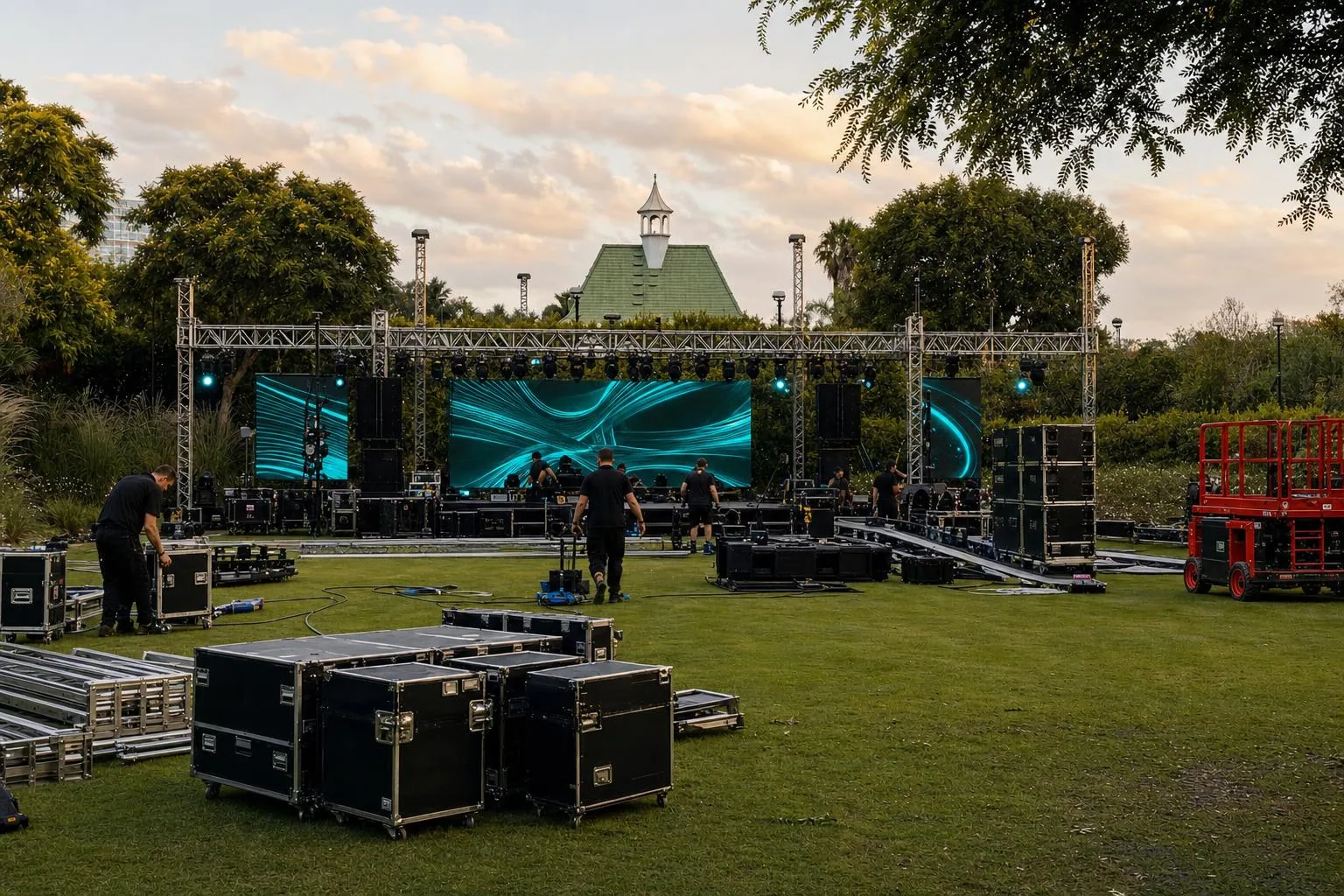
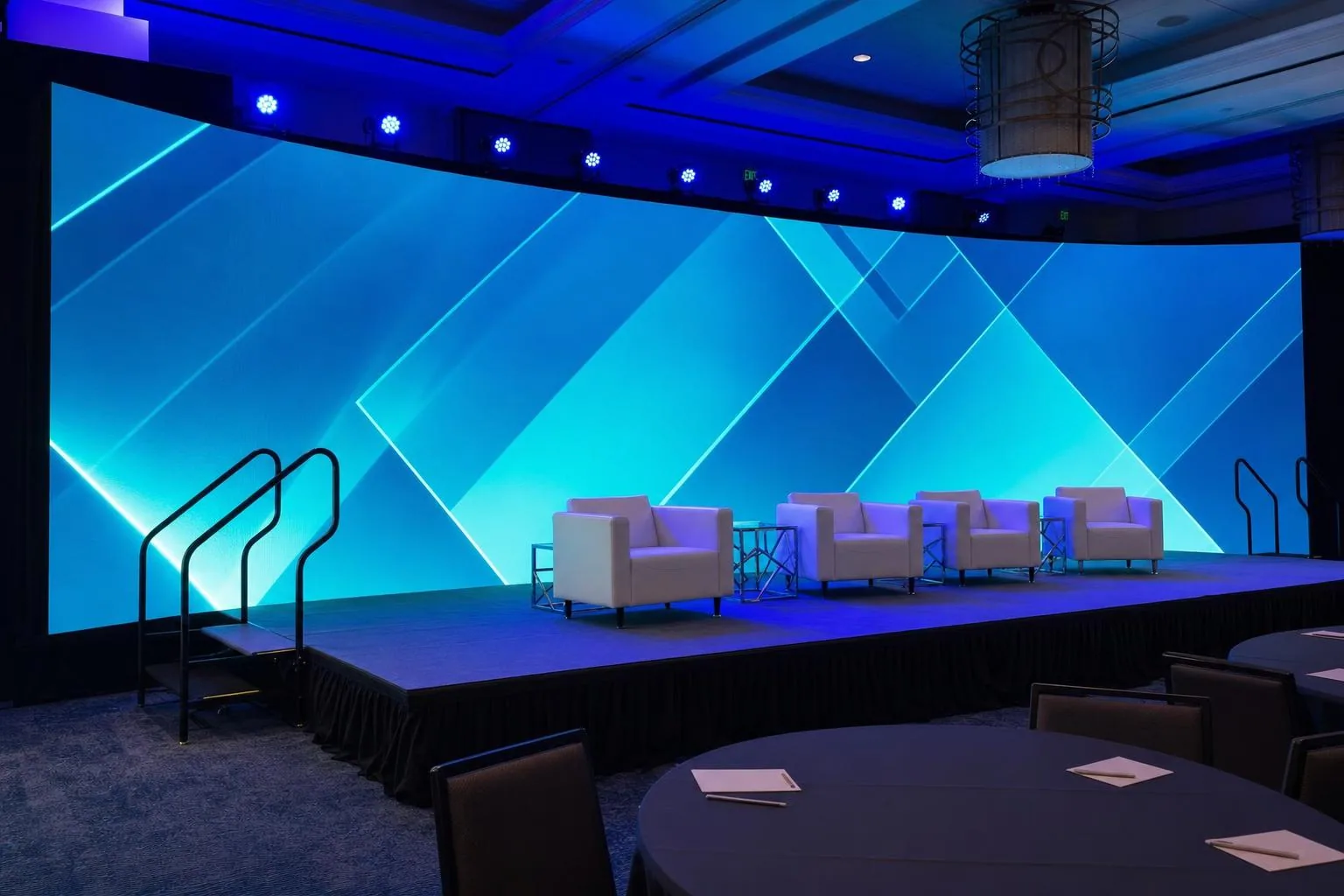
Now compare that to what $60,000 gets you in literally any other production category. That's a floor-to-ceiling LED video wall for your main stage. Or a multi-camera video production setup. Or custom lighting design across your entire event space. Or all three, depending on how you structure it.
The WiFi doesn't make your event better. It makes the venue's quarterly report better.
Here's the part that changes the math: you can bring your own network.
Licensed mobile broadband technology, the same infrastructure that cellular carriers use, can be deployed at any venue completely independent of the venue's WiFi system. It doesn't touch their equipment or use their bandwidth. It's a separate, private network for your event only.
The technology has existed in enterprise contexts for a few years, but it's only recently become available as an event-day service. Here's what that gives you:
And the cost? For production companies that own this infrastructure, it's a fraction of what venues charge because the ongoing operating cost of a mobile broadband deployment is dramatically lower than the markup venues apply.
Whether you use an independent network or not, these questions will save you money:
Most venues can't answer this specifically because your event is sharing bandwidth with everything else happening on their property. If they can't give you a number with a guarantee attached, you're buying a promise, not a service.
Some venues have never been asked this. The ones that have may have already adjusted their contracts. This question alone can save you $20,000 to $40,000, even if you don't bring your own network, because it introduces competition into a line item that's been monopolized.
When you break venue WiFi pricing into a per-megabit cost, it often works out to 5-10x what the venue is paying their ISP. Knowing this number gives you leverage in any negotiation.
Our calculator shows exactly where that $40K-$100K goes when it stays in your production budget.
Try the WiFi Savings Calculator →We're not writing this to sell you on a particular solution. We're writing it because we genuinely think every planner should know this cost is worth questioning.
Some of you will use this information to negotiate better venue WiFi rates. Some will explore independent network options. Some will decide the venue WiFi is fine for your needs. All three are valid outcomes.
At MMPAV, we built our own mobile network because we saw this dynamic playing out with every client we worked with. The production budget kept shrinking because the venue's WiFi bill kept growing, so we decided to make it irrelevant.
For Spring 2026 events, our mobile network is included free. That's not a teaser or a trial, it's a full deployment at no cost for up to 20 events. If you're curious about what that looks like for your specific event, here's everything you need to know.
Whether you end up working with us, with someone else, or just negotiate harder with your venue, the important thing is knowing you have options. Nobody told us that when we started. Now you know.
15-minute call. No pitch. Just a conversation about your event and the numbers that actually matter.
Let's Talk →Currently accepting Spring 2026 events